
Whether you have a damp cellar beneath a Victorian terrace or a newly constructed basement that needs protecting before first use, choosing the right basement waterproofing service in the UK is one of the most important decisions you will make for your property. Get it right and you gain a dry, usable, structurally sound space that adds real value. Get it wrong and you face mould, structural deterioration, failed warranties, and remediation bills that regularly reach £20,000 to £40,000.
This guide covers everything homeowners, developers, and self-builders need to understand about professional basement waterproofing services in the UK: what services are available, which system is right for your situation, what you can expect to pay in 2025, and how to find a qualified specialist who will get it done properly.
What Do Basement Waterproofing Services in the UK Actually Include?
Basement waterproofing is not a single service. It is a range of closely related but technically distinct processes, each suited to a different type of property, condition, and intended use. Reputable UK waterproofing specialists typically offer the following core services:
- Structural waterproofing design. An independent, BS 8102:2022-compliant design produced by a CSSW-qualified specialist. This is the foundation of every successful project and includes a full risk assessment, system specification, CAD drawings, and junction details.
- Internal tanking (Type A). Application of cementitious slurry, crystalline coatings, or waterproof render to the internal faces of basement walls and floors to create a physical barrier against moisture ingress.
- Cavity drain membrane systems (Type C). Installation of a studded dimple membrane, perimeter drainage channel, sump chamber, and submersible pump to manage and discharge any water that enters the structure. The most widely used solution for UK cellar conversions and retrofit projects.
- External waterproofing (Type A, external). Application of waterproof membranes or coatings to the external face of the structure before backfilling. Only accessible on new-build or major renovation projects.
- Structural waterproof concrete (Type B). Design and specification of waterproof concrete mix designs for new-build basements, including waterstops at construction joints. Exclusively available on new-build projects.
- Combined multi-system waterproofing. For Grade 3 habitable environments, the combination of two or more system types, typically Type A external membrane plus Type C internal cavity drain, to provide the redundancy required by BS 8102:2022.
- Cellar conversion waterproofing. Full waterproofing design and installation specifically for converting existing cellars into habitable rooms, including sump and pump installation, drainage, and substrate preparation.
- Remedial and repair waterproofing. Assessment and remediation of failed waterproofing systems, including injection works, crack repairs, joint sealing, and system upgrades.
At CSSW Design, the focus is on independent structural waterproofing design, the critical first step that determines whether every other service will actually work. A properly specified design means you receive competitive, like-for-like quotes from approved installers rather than competing sales pitches from contractors with a vested interest in the products they sell.
Which Basement Waterproofing Service Do You Actually Need?
The right waterproofing service depends on three things: the current condition of your basement, your intended use of the space, and the groundwater conditions on your site. Here is a practical guide to matching your situation to the appropriate service:
Damp Cellar Used for Storage
If you have a damp or slightly wet cellar that you want to use for dry storage, a Type A internal tanking system applied by a specialist is often sufficient. Cementitious renders and slurry coats applied to sound masonry can control low-level moisture at relatively modest cost, typically from £40 per m² for materials upwards.
Cellar Conversion to a Habitable Room
Converting a cellar into a bedroom, home office, gym, or living room requires Grade 3 waterproofing under BS 8102:2022, which means a completely dry, moisture-free internal environment. In virtually all retrofit UK cellar conversions, a Type C cavity drain membrane system combined with a properly sized sump and pump is the recommended approach. For the highest-risk sites or where absolute belt-and-braces protection is required, a combined Type A plus Type C approach delivers the redundancy the standard recommends. Either way, the system must be specified by a CSSW-qualified design specialist before any installation work begins.
New-Build Basement
On a new-build basement, you have access to the external face of the structure before backfilling, making this the most technically optimal point to waterproof. A well-specified new-build basement will typically combine a Type A external membrane with a Type B waterproof concrete mix design. Many structural engineers will add a Type C cavity drain internally as a third layer for Grade 3 environments, providing defence in depth and a clearly maintainable, serviceable system that satisfies both building control and warranty providers.
Failed or Leaking Waterproofing
If an existing waterproofing system has failed, whether it is tanking that is delaminating, a cavity drain that has blocked, or a sump pump that has failed, the priority is a proper diagnosis before any remedial works begin. Remediation costs vary widely depending on the cause and extent of failure, but they are almost always significantly higher than the cost of getting the original specification right. A qualified specialist will assess the failure mode and specify the appropriate repair or system upgrade.
Key principle: The system type should always be determined by an independent waterproofing design specialist based on your site conditions and intended use, not by a contractor who profits from selling a specific product.
Basement Waterproofing Service Costs in the UK: 2025 Guide Prices
Cost is understandably the first question most UK homeowners ask. The honest answer is that basement waterproofing costs vary significantly depending on the system type, basement size, existing conditions, and location. Here are accurate guide prices based on current 2025 UK market data:
UK Basement Waterproofing Service Costs: 2025 Guide Prices
| Service Type | Typical System Used | Basement Size | Estimated Cost (2025) |
|---|---|---|---|
| Basic internal tanking | Type A cementitious | Small (up to 25m²) | £1,000 – £3,000 |
| Cavity drain system | Type C dimple membrane + pump | Medium (25–50m²) | £4,000 – £8,000 |
| Combined Type A + C | Barrier + cavity drain | Medium (25–50m²) | £6,000 – £12,000 |
| Full waterproof design +installation | Combined (Grade 3 habitable) | Large (50m²+) | £10,000 – £20,000+ |
Guide prices exclude VAT. Actual costs depend on site conditions, access, substrate preparation, and location. Based on industry data 2025 (Checkatrade / B3 Cost Consulting / Premcrete / MPS Concrete).
A useful rule of thumb for budgeting is approximately £100 to £120 per m² for professionally installed waterproofing, measured across all wall and floor surfaces to be treated. For a 4m x 5m basement with 3m high walls, around 74m² of surface area, this equates to roughly £8,000 for a professional Type C installation. Larger basements benefit from a lower cost per m², while complex sites, high water tables, or Grade 3 habitable use can push costs toward the higher end of the range.
London and the South East typically carry a 10 to 20% premium over the national average, while dual-pump sump systems with battery backup, strongly recommended for habitable rooms, add between £800 and £1,500 to the base pump cost.
Why Independent Waterproofing Design Should Come Before Any Service
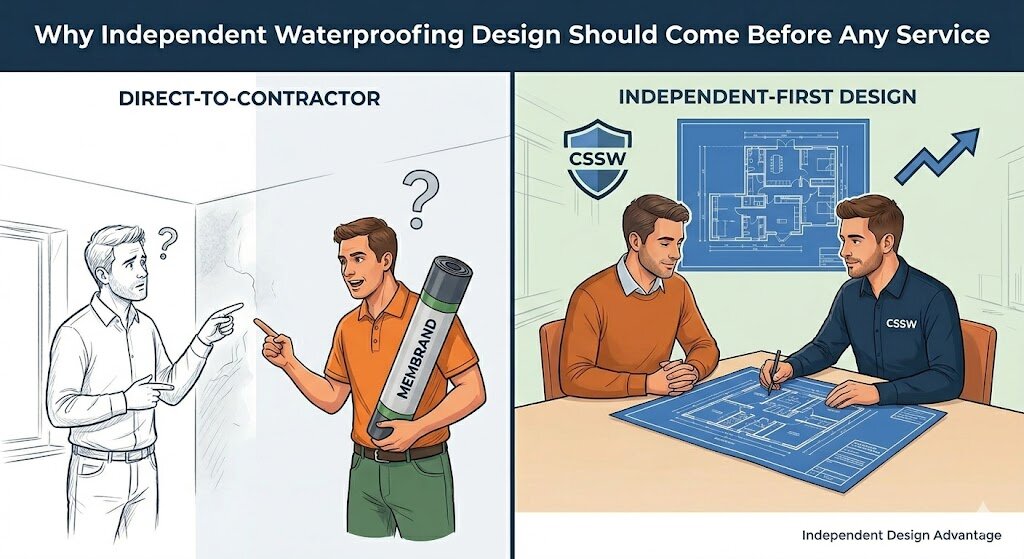
One of the most common mistakes UK property owners make is approaching basement waterproofing contractors directly and accepting their system recommendation without independent verification. Contractors who supply and install specific products have a commercial interest in recommending those products, regardless of whether they are the most appropriate solution for your site.
The right sequence is: appoint a CSSW-qualified design specialist first, receive an independent specification and design, then use that specification to obtain competitive quotes from approved installers. This approach consistently delivers three key benefits:
- Better protection. The design is based on what your site actually needs, not what a contractor stocks.
- Cost savings. Multiple contractors quoting against the same specification allows genuine price comparison. Studies show that independent design input typically saves 15 to 20% on overall project costs.
- Full compliance. BS 8102:2022 requires a named CSSW design specialist on the project. An independent design report satisfies this requirement and provides the documentation that warranty providers and building control need.
CSSW Design provides independent structural waterproofing design across the UK, with all designs fully compliant with BS 8102:2022 and backed by professional indemnity insurance. Find out more about our design service.
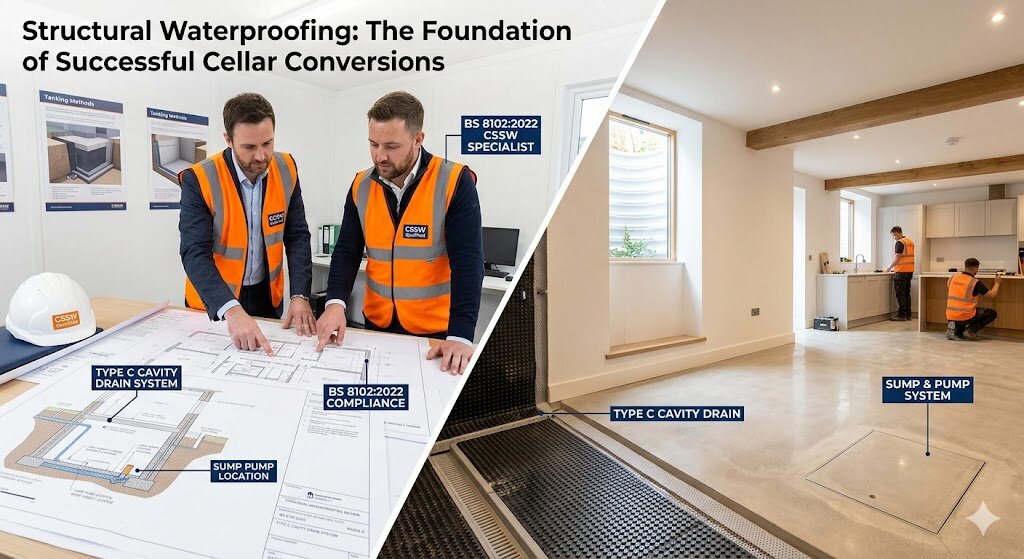
Alt text: An independent CSSW-qualified waterproofing design specialist reviewing structural waterproofing plans and specifications for a UK basement project in 2025.
How to Choose a Reliable Basement Waterproofing Service in the UK
With dozens of contractors advertising basement waterproofing services across the UK, knowing how to separate the genuine specialists from the generalists is essential. Here is what to look for:
- CSSW-qualified designer involvement. The design must be produced by a Certificated Surveyor in Structural Waterproofing. Ask specifically whether the design is CSSW-qualified and whether professional indemnity insurance covers it.
- Property Care Association (PCA) membership. PCA-registered installers have been vetted for technical competence, insurance, and compliance. Membership does not guarantee quality, but its absence is a warning sign.
- BBA-approved materials. The systems and materials used should hold British Board of Agrément (BBA) certification, confirming independent assessment of their performance.
- 10-year installation guarantee. Any reputable basement waterproofing contractor should offer a minimum 10-year installation guarantee, ideally backed by an insurance-backed guarantee (IBG) from a third-party insurer.
- Independent specification, not contractor-led. Be cautious of any contractor who provides a design and installation package without an independently produced specification. Ask whether the design is produced in-house or by an independent specialist.
- Clear written quotation. Quotes should reference a specific system specification, detail all materials, include all labour and preparation, and clearly state what is and is not included.
The Right Basement Waterproofing Service Starts with the Right Design
The UK basement waterproofing market is full of contractors who will happily arrive at your door with a product recommendation and a price. The problem is that without an independent specification, you have no reliable way of knowing whether that recommendation is right for your property, compliant with BS 8102:2022, or the most cost-effective option available.
The single most effective step any property owner, architect, or developer can take is to commission an independent waterproofing design from a CSSW-qualified specialist before speaking to a single contractor. It costs a fraction of the construction budget, protects your warranty, satisfies building control, and gives you complete confidence that the system installed will actually work. Get in touch with the team at CSSW Design today for an independent consultation on your project.
Frequently Asked Questions About Basement Waterproofing Services in the UK
What does basement waterproofing involve?
Basement waterproofing involves designing and installing a system to prevent water ingress into a below-ground space. Depending on the site and intended use, it can include internal tanking, cavity drain membranes with a sump pump, external waterproof membranes, or a combination of these. The system must be designed to BS 8102:2022 by a qualified specialist.
How much does basement waterproofing cost in the UK?
The average cost is approximately £100 to £120 per m² of surface area treated. A 4m x 5m basement with 3m high walls typically costs around £8,000 for a professional installation. Costs vary based on system type, basement size, condition, and location.
What is the best waterproofing system for a UK basement?
For habitable rooms, a Type C cavity drain membrane system is the most widely used and reliable solution for retrofit UK basements. For new-build projects, a combined Type A external membrane plus Type B waterproof concrete is the starting point. Grade 3 environments typically require at least two system types combined.
Do I need planning permission for basement waterproofing?
Waterproofing an existing basement generally does not require planning permission. Converting a cellar into a habitable room, installing a lightwell, or altering the external appearance of the property may require planning consent. Always check with your local planning authority before beginning works.
How long does basement waterproofing take?
A straightforward internal tanking installation typically takes 2 to 5 days. A full Type C cavity drain system with sump and pump can take 3 to 7 days depending on basement size and complexity. Combined system installations on larger projects may take 1 to 3 weeks.
Is basement waterproofing worth it?
Yes, significantly so. A professionally waterproofed and converted basement adds £30,000 to £80,000 to property values in suburban UK locations. The cost per m² to create usable basement space is consistently lower than its resale value, particularly in London and the South East.
What is the difference between tanking and a cavity drain system?
Tanking (Type A) forms a physical barrier on the structure itself using cementitious coatings or membranes, attempting to stop water from entering. A cavity drain system (Type C) does not block water, it collects any that enters and pumps it away. Cavity drain is more reliable for habitable spaces and easier to maintain and repair.
How long does basement waterproofing last?
A professionally designed and installed system should last the full life of the building when correctly maintained. Most reputable UK contractors offer a 10-year installation guarantee, with 25-year system warranties available through some approved programmes.
Can basement waterproofing be done from the inside?
Yes. The majority of retrofit basement waterproofing in the UK is carried out internally, since the external face of the structure is inaccessible in existing properties. Both Type A internal tanking and Type C cavity drain systems are applied from inside the basement and are highly effective when correctly specified and installed.
How do I find a qualified basement waterproofing specialist near me?
Start by appointing an independent CSSW-qualified design specialist like CSSW Design to produce a specification for your project. Then use that specification to obtain quotes from PCA-registered installers. This approach ensures the design is independent and you are comparing like-for-like prices from approved contractors.